The 3 DEMO accounts that followed it went from −94.3% to −21.0%: the large number is the smallest loss. The confidence written at entry was 6.0 out of 10.
It is the card STA users received, with the agents' reasoning and the levels decided before entering.
The price sits on a floor touched several times, dipping below and coming back. Those repeated dips have worn out the buyers defending it. The wider trend now points down, so we look for the floor to give way and a drop to the next support.
We don't sell on a hunch. We wait for an hour of trading to close below 0.16296 with clearly more activity than usual, proof that the floor has really broken. If that doesn't happen, nothing is opened.
If instead the price rises to 0.179247 the floor has held and the idea is wrong. The position closes on its own and the loss stays defined and known from the start.
The possible gain is about twice the risk and it needs little time. Costs are low. The wider picture is mixed, though, and recent news about funds moved on Arbitrum could still push the price either way.
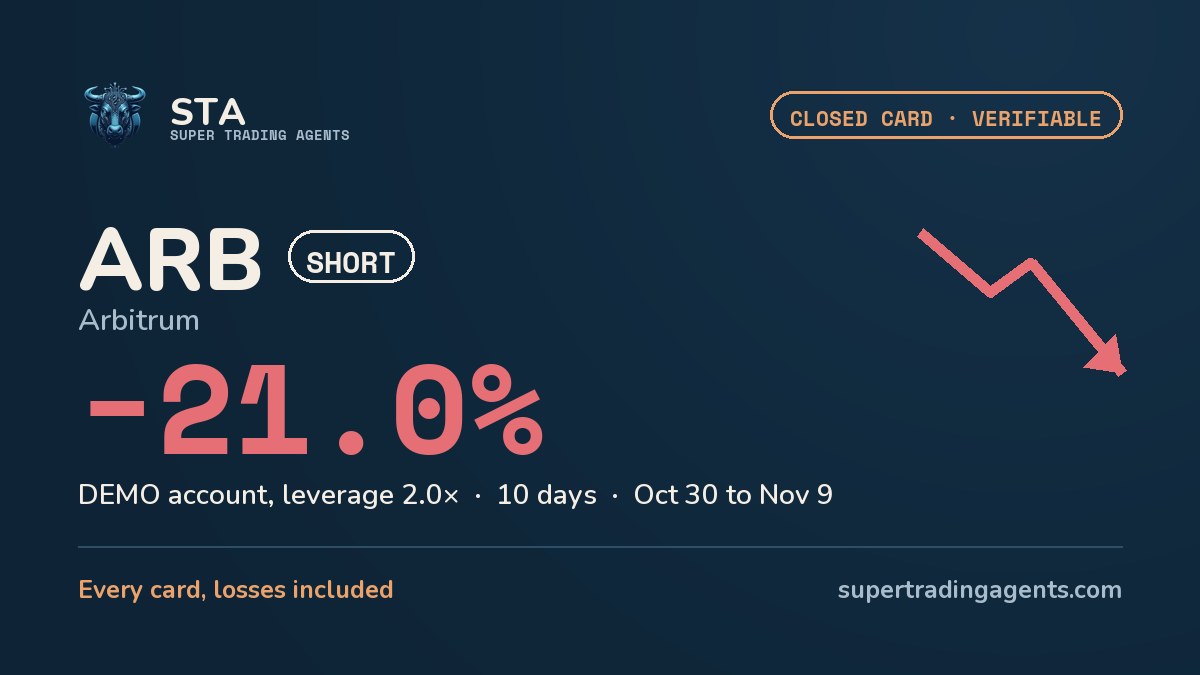
ARB is the coin of Arbitrum, a network built on top of Ethereum to make transactions faster and cheaper. In late October the price was sitting on a floor it had touched several times, dipping below and coming back, and those tests had worn out the buyers. The wider trend pointed down.
It was a Sentinel, with confidence 6 out of 10. The agents were waiting for an hour to close below the floor with trading clearly above average. The wider picture was mixed, and some news about funds moved on the network could push the price either way.
We are sorry for how it went. The Sentinel triggered and at first the price dropped a little, but the break never followed through. The price came back up, rose 10.7% and after ten days touched the stop, which closed the position on its own. Three accounts had followed it. With the card's leverage the loss was 21.0%, as planned, while those using higher leverage lost much more, up to 94.3%.
The reading of the moment didn't work. The price had been compressed for days and there were signs that buyers were coming back, and the agents had even written them among the risks. The card sold just as the price was reclaiming the floor, and on top of that after the coin had already fallen a lot in twenty four hours.
The stop did its job and kept the loss within what the card had planned. The agents now give more weight to signs of recovery before selling at a floor.
This card's hash was written in the public register on the day it was born, before anyone knew how it would end. Anyone can check that it has not been changed.
0931773f41b8… · the register of 30/10/2026
A card that went badly says a lot about whoever publishes it. STA Super Trading Agents shows these too, with the real numbers and no beating around the bush, because that is how trust is built.
Every proposal arrives finished, with the risks written down before anything happens. It is up to you to decide whether to follow it, and how much to put in.
This page tells the story of a closed card and is for information only. It is not investment advice and past results do not guarantee future ones. Trading crypto-assets involves a high level of risk, including the total loss of the capital invested.
