STA was born in Milan from the meeting of an entrepreneur who has spent twenty years starting and reviving businesses and a software engineer who builds systems for finance and the cloud. We put our faces on it: here you'll find who we are and how we work.
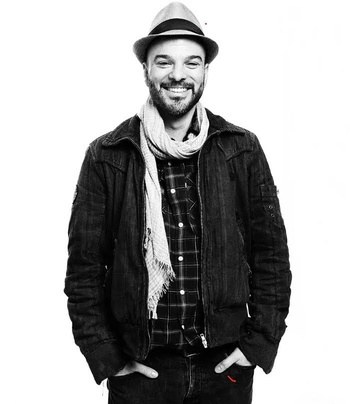
I started behind a counter at 22, working as a bartender for a catering company. Ever since, I've kept asking myself the same question: how could this be done better?
That question led me to open my first catering business with two friends, and then a second one with two other industry professionals: I grew both and sold both. In 2011 I opened NaBi, a healthy restaurant in Milan, back when healthy food was still a gamble. Inside NaBi I tried something almost nobody was doing at the time: a delivery-only kitchen that supplied the city's cafés with homemade cakes for people with food intolerances or on a vegan diet. I sold NaBi in 2023, in its best year.
Since 2019 I have been helping other venues get started or back on their feet, with a deal that for me is a matter of respect: you don't pay me until I've brought you to break-even, and if I don't manage it, you owe me nothing. We share the risk, and whatever we've built together stays yours either way.
STA comes from the same curiosity, aimed at something new: artificial intelligence. I wondered whether a team of agents could reason about markets like a good working group: one gathers the data, one argues for an idea, one takes it apart, one decides. I wasn't born a trader or a programmer, and I don't hide it: I'm a curious entrepreneur who trusts people but wants to see the numbers, and who doesn't settle for the first answer.
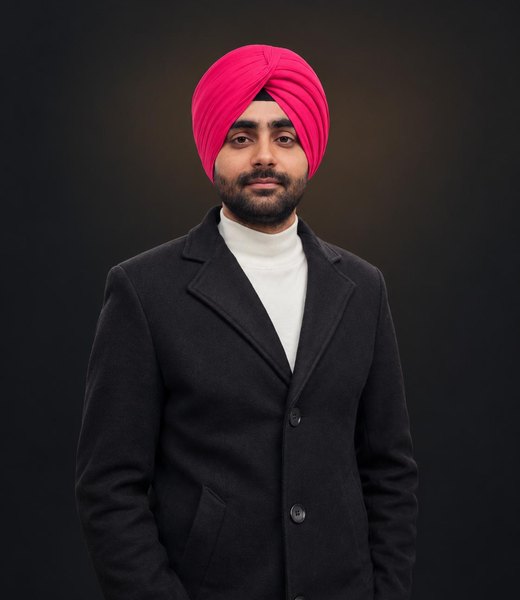
I started programming out of curiosity, getting into software development through video games. I was fascinated by the idea of building something from scratch, understanding how it worked and finding a way to make it better.
Since then, that curiosity has been the common thread of my path. Over the years I've worked on mobile apps, financial systems and cloud infrastructure, taking care of everything behind a digital product: from the interface people use to the systems that process data and make decisions.
I've never wanted to limit myself to a single language or technology. To me, programming is above all about solving problems. Code is the tool, not the goal.
My interest in financial markets and artificial intelligence led me to explore a particularly complex problem: how to turn large amounts of data into decisions that are structured, verifiable and, ideally, better. That's where STA comes in. The idea of building agents that can analyse the market, compare strategies and work together brings together several fields I'm passionate about: software engineering, automation, artificial intelligence and finance.
But there's one principle I consider fundamental: an intelligent system is not necessarily a reliable one. That's why I believe in the importance of testing, risk management and constantly questioning the results. I don't believe in technology for its own sake, or in miracle solutions. I believe in systems built with method, improved through experience and designed to tackle real problems.
The question that has stayed with me since I wrote my first lines of code is always the same: can it be done better?
In restaurants, Giordano didn't get paid until the place could stand on its own; Gopal doesn't trust a system until the tests prove it. STA works the same way: its fee is a share of the net result on the days you close in profit, and on days in loss or at break-even you pay nothing. During the launch phase, not even that: fees are suspended.
No idea gets into STA because it sounds clever: it gets in if it holds up on the data, across several different periods.
The history contains every card, closed well or badly, with its hash.
STA proposes and explains. What to open, how much and when is your choice.
