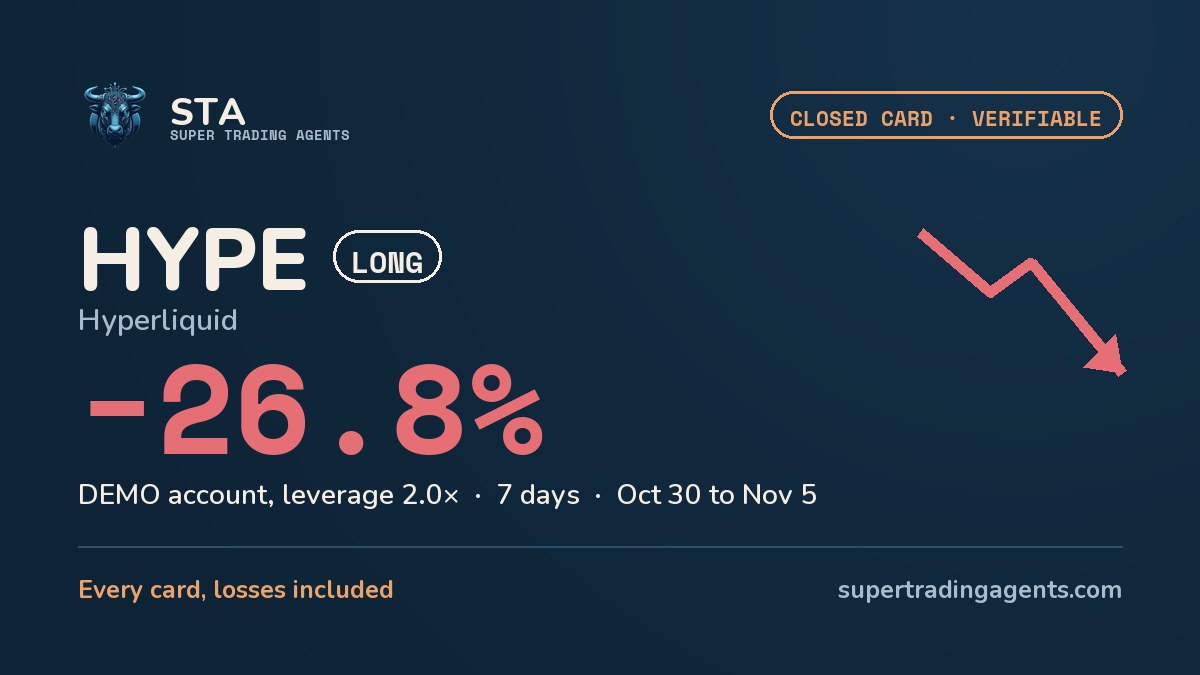
The 4 DEMO accounts that followed it went from −94.5% to −26.8%: the large number is the smallest loss. The confidence written at entry was 4.0 out of 10.
It is the card STA users received, with the agents' reasoning and the levels decided before entering.
HYPE is rising and buyers keep stepping in. The price went up, pulled back and held above the area it had just reclaimed, a sign buyers are defending it. This idea follows that trend.
We're not buying now. We wait for an hourly candle to close above 87.97 with much more activity than usual, proof that buyers are really behind the move. If that doesn't happen, nothing opens.
If the price falls back to 77.0724, the hold has failed and buyers have given up the area they were defending. The position then closes on its own, with a loss defined and known from the start.
The possible gain is smaller than the risk, so it's a modest attempt, not a big bet. Costs are low and it needs a couple of days. The deal and the reduction in coins support the idea, although much of the rise has already happened.
HYPE is the coin of Hyperliquid, a platform for trading crypto contracts that runs entirely on its own network. At the end of October it was rising fast, driven by an important deal and a reduction of the coins in circulation. The price had gone up, pulled back and then held above the area it had just reclaimed, a sign buyers were defending it.
The agents set up a Sentinel that would buy only after an hour closed above that area with more trading than usual. Confidence was 4 out of 10, and they had written that much of the rise had already happened.
We're sorry, this card went badly. The Sentinel triggered on the last stretch of a vertical run, just as the rest of the market was falling hard. The price touched an area of sellers just above the entry and never rose from there. In seven days it fell 13.1% down to the stop, which closed the position on its own. With leverage 2, the loss on the money put in was about twice the price move. Four DEMO accounts had followed it.
Buying after such a fast rise didn't work, with the market around it heading the other way. And the target sat behind an area of sellers the price had not yet crossed. Those were the two risks written at entry, both of them showed up, and the card went ahead anyway.
What has to change is the moment when the decision to open is made. The lesson the agents reread before their next analyses is that, when the written risks are this clear, you reduce the size or give up the card.
This card's hash was written in the public register on the day it was born, before anyone knew how it would end. Anyone can check that it has not been changed.
f5482d89a981… · the register of 30/10/2026
We're showing you this one too, a card that went badly, because we think you should see everything. STA Super Trading Agents wants to make trading accessible to everyone, and that means telling the losses as clearly as the gains.
The agents prepare the full analysis, with the risks written before entering. You decide whether to follow it.
This page tells the story of a closed card and is for information only. It is not investment advice and past results do not guarantee future ones. Trading crypto-assets involves a high level of risk, including the total loss of the capital invested.
