 Giordano Salvatori, founder of STA · 22/10/2026 · 6 min read
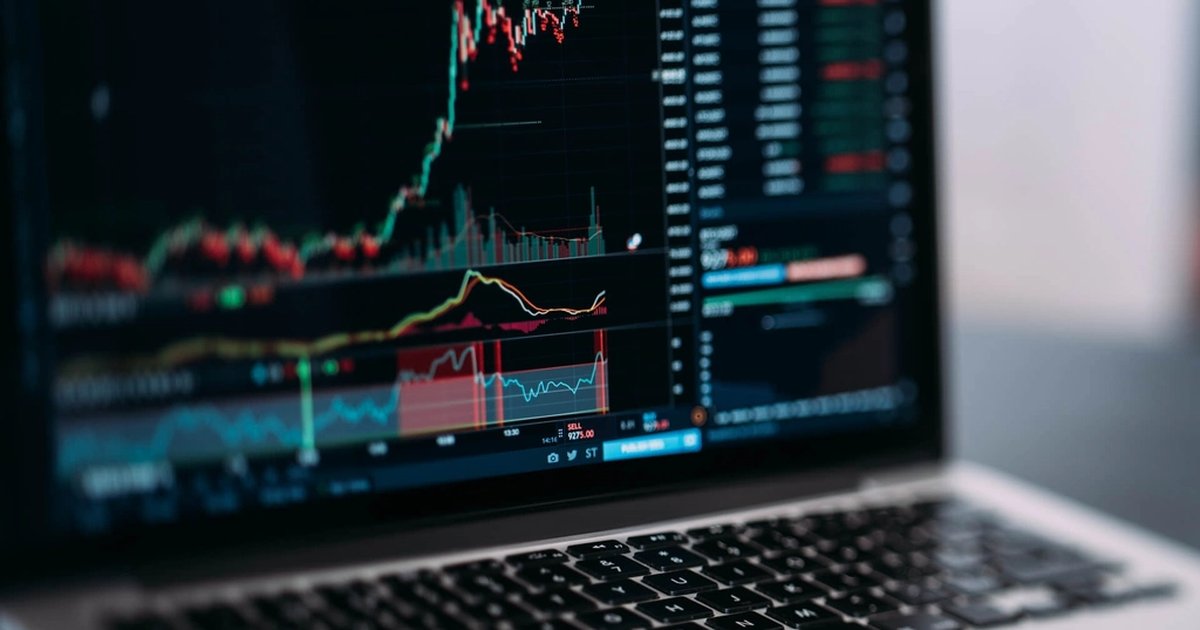
Trading online means opening and closing positions on the financial markets from a computer or a phone, through a platform. The basic idea is simple: you buy when you think a price will rise, you sell when you think it will fall, and the result is the difference between the entry price and the exit price, minus costs.
The word «online» changed just one thing, but a huge one. About thirty years ago, to buy a share you phoned your bank and waited. Today the order goes out with a tap and is filled in an instant. That speed is convenient, and it is also why many people lose money: deciding in a hurry is as easy as getting it wrong in a hurry.
If you want the complete path to get started, step by step, there is our guide to mindful online trading. Here we look inside the machine: what you buy, with what, how much it costs and who oversees it.
The most common markets are four. Shares are stakes in companies listed on the stock exchange, from large American companies to Italian ones. ETF are baskets of securities you buy like a single share, tracking a whole index such as the S&P 500. Currencies, known as forex, trade in pairs such as euro against dollar. Cryptocurrencies, such as bitcoin and ether, trade every day at any hour, including nights and weekends.
Each market has its own character. Shares follow exchange hours and company results. Cryptocurrencies never close and move more: on an ordinary day a 5% move is normal, something that rarely happens on a large ETF. Choosing the market also means choosing how much turbulence you are willing to bear.
This is the difference many people discover too late. When you buy a share or a cryptocurrency directly, that thing is yours: if the price falls you keep it, and you can wait. When instead you use a CFD, a future or a perpetual contract, you own nothing. You hold a contract that tracks the price movement, often with leverage.
Leverage is the delicate point. With leverage of 5, a 1,000 euro position needs 200 of margin, and a 10% move against you costs you 100 euros, half the margin. It works the same way when things go well, which is why people like it. But losses arrive just as fast, and if the margin runs out the position closes on its own. The guide on leverage explains it calmly.
Leveraged contracts also let you profit when the price falls, by opening a short position. It is a real tool, but not a gift: to understand when it makes sense there is the explanation of long and short.
Every trade goes through an order. A market order buys immediately at the price available at that moment. A limit order waits for a price you choose, and if the market does not get there nothing happens. Then there are the orders that protect you: the stop loss closes the position if the price moves against you down to a level decided in advance, the take profit closes it when it reaches the profit you had set as your goal.
Anyone who trades with a method decides these three prices before entering: where they get in, where they get out if they are wrong, where they get out if they are right. That is the difference between a trade and a bet. To go deeper, there are the guides on the stop loss and the take profit.
«Zero commission» is the most repeated phrase in the industry, and it is almost never the whole truth. The costs of a trade are usually three. The commission for each purchase and sale, sometimes fixed and sometimes a percentage. The spread, that is the difference between the price you can buy at and the price you can sell at in the same moment: it is a cost even when nobody calls it one. And funding of leveraged positions, paid every day or every few hours as long as the position stays open.
Taken one by one they look small. Over many short trades they become the main reason a method that works on paper ends up losing. Before choosing a platform, look at the full cost sheet, not just the advertising. Then there are taxes on gains, which in Italy depend on the instrument and on how the account is held: on this it is worth asking an accountant.
In Italy, brokers offering financial instruments must be authorised and supervised by CONSOB, or by an authority of another European country that allows them to operate in Italy too. Under the European MiCA regulation, firms offering crypto services must now be authorised as well. On the CONSOB website you can check whether a company is authorised, and you also find the list of websites blocked for operating illegally.
There is another figure CFD brokers are required to show: the percentage of retail accounts that lose money with them. It usually sits between 60% and 90%. It is not a detail to skip. It tells you what the market you are entering looks like, and why the honest numbers are the ones we explain in the article can you make money with online trading?.
From the part that costs nothing. A demo account uses real market prices and simulated money: you can try orders, stops, leverage and costs without risking a cent, and find out how you react when a trade goes wrong. It is the most serious way to tell whether online trading is for you, and how to use it well is explained in the guide to the demo account.
When you move to real money, start with an amount you can lose without your life changing. How much, you find in how much money you need to trade online.
STA Super Trading Agents is not a broker and does not hold your money. It proposes trading cards for crypto and US stocks on OKX, built by ten artificial intelligence agents that debate with each other before proposing a trade. Every card has entry, stop and target decided in advance, and the reasoning written in plain words. Your funds stay on your OKX account.
You can try it free in DEMO, with real prices and simulated money. On fees: during the launch phase, which began on 16 October 2026, STA Super Trading Agents fees are temporarily suspended, in REAL too. The regular price list is 18% of the positive net result of each day, with no offsetting of losses.
Every card as soon as it closes, with the result and what STA learned from it. It's free and you don't need to sign up.
Follow the channelA DEMO account with virtual capital and real prices, the same cards as REAL users.
Try DEMO for free →This article is for information only and is not investment advice. Trading crypto-assets involves a high risk, including the total loss of the capital used. Numerical examples are for illustration.
Risk management in trading: how much to risk per trade, how to calculate the position and how to use a stop, with made up examples and a demo account.
Trading online with artificial intelligence: what AI can do, what it can't, how to try it on a demo account and how to spot those who promise too much.
Is trading online worth it? It depends on the costs: spread, fees, swap and slippage. What really weighs on a small account and how to do the maths first.
